Program for Research on Inequality (PRI) 2026 research grants awarded to three Princeton students
The Program for Research on Inequality (PRI) at Princeton awarded three research grants for 2026 to Princeton graduate students pursuing innovative, exciting work on the topic of inequality. The grants, awarded by PRI Director Ellora Derenoncourt, reflect PRI’s ongoing mission to support and foster community among scholars of inequality in economics and to actively support research in this area.
Meghana Gaur, Rachel Moore, and Bennett Smith-Worthington are pursuing a Ph.D. in economics at Princeton. Learn more about their research projects below.
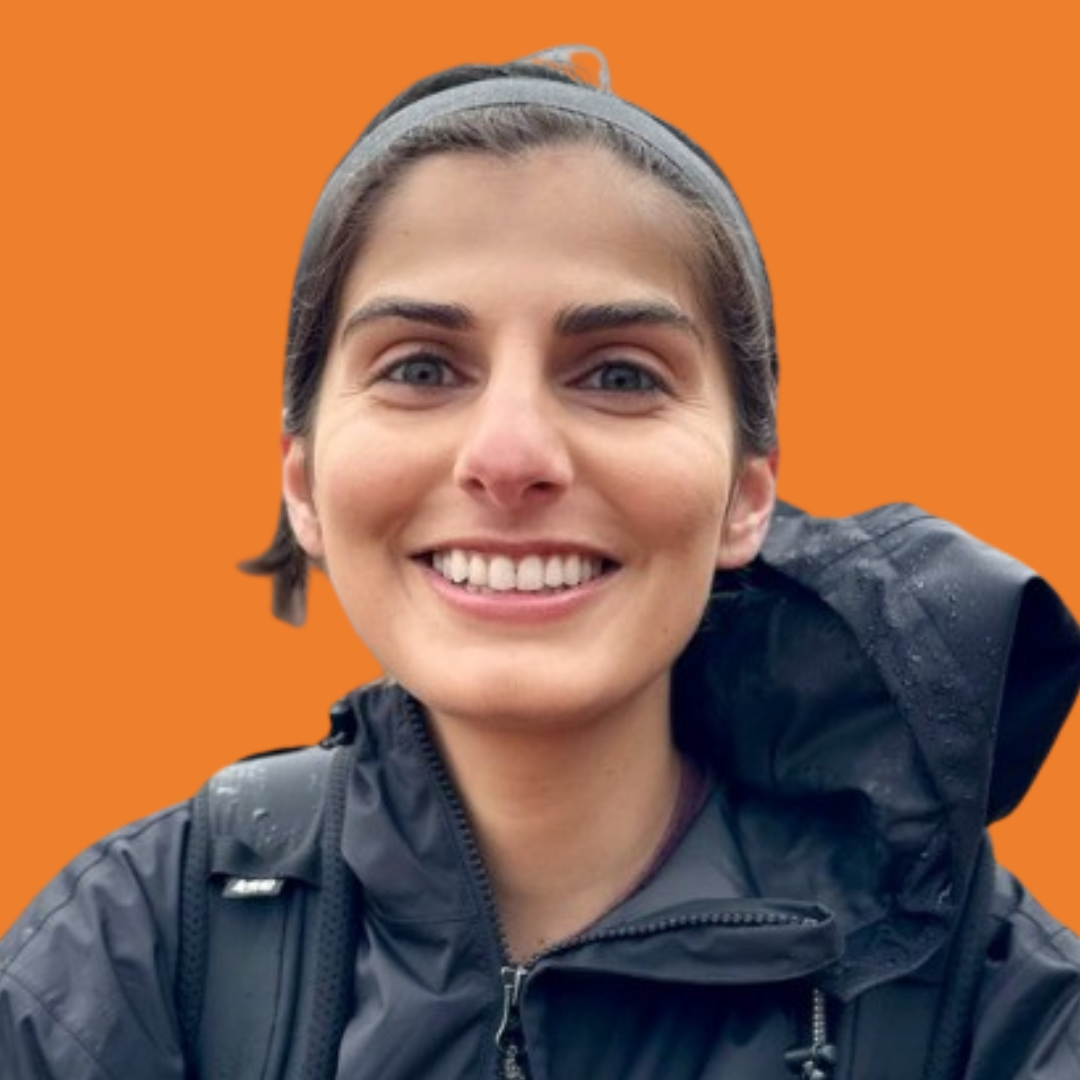
Meghana Gaur
Meghana Gaur’s research project, "Robots, Jobs, and Organized Labor," investigates how organized labor shapes the direction and impacts of technological change within firms.
The project is a joint effort with fellow Ph.D. student Agustín Barboza, who received one of PRI's 2025 grants. Speaking further on their research, Gaur shared, "There is a large literature studying the impacts of automation on workers. In particular, the task-based framework has become central to our understanding of automation and labor markets. Yet the existing literature largely abstracts from the institutional constraints governing how firms implement technological change. In practice, adjustment is costly: dismissing incumbent workers triggers severance obligations and procedural requirements; hiring replacements requires search and screening; retraining existing employees demands time and resources." Gaur's project explicitly incorporates these considerations, generating predictions that differ from those of static frameworks.
Gaur aims to identify the mechanisms by which labor market institutions, such as those provided by works councils, can promote the re-skilling and transition of incumbent workers who are most vulnerable to displacement from automation technologies, such as industrial robots.
"The PRI grant provides us with the funds to purchase relevant datasets and gain access to increased computational resources for empirical analysis. Additionally, the grant will also help us disseminate our findings at various conferences," Gaur said.

Rachel Moore
Rachel Moore's research project, "Degrees of Access: Community College Foundings, Program Design, and Racial Integration, 1940–1980," using a novel data set of college openings and expansions along with Census data, will use an event study to understand how the rapid expansion of community colleges in the mid-20th century affected individual education, mobility, and earnings along with local economic activity. Her project also seeks to understand how Black community colleges and their future integration impacted racial inequality. "Beyond increasing access to college education generally, this setting offers an opportunity to understand how each sector of community colleges impacts participants. These early community colleges were often more narrowly focused than community colleges today, initially specializing in certificates, teaching, or associate's degrees before expanding to offer additional degree programs. The various educational focuses of these new colleges will allow us to understand not only the impact of access to education in general, but also how those impacts can differ by the type of education offered," said Moore.
As her mother is a community college professor, Moore has long been interested in community colleges and their role in the U.S. postsecondary education system. Moore shared, "Most college graduates in the US have at least one credit from a community college. Despite their massive role in post-secondary education, we just don't know that much about them. I didn't realize until I was digging through these historical documents that most community colleges were established post-WWII, and now I want to know what happened and why."
"The PRI grant will help me hire an RA to be able to help with data cleaning. One reason we know little about this period in educational history is that there is limited readily available data. The RA will help me extract information from college directories, court case records, and accreditation documents to form a more complete picture of what is occurring during this period," said Moore.

Bennett Smith-Worthington
Bennett Smith-Worthington's research project, "The Distributional Impacts of Inflation," starts with a simple, well-known fact: inflation doesn’t hit everyone equally. If all prices increased by $1, lower-income households would be more affected than higher-income households, as the shock would have a larger relative impact on low-income consumers. Smith-Worthington and his coauthor Michel Gutmann, a Ph.D. student in Economics at Northwestern, argue that firms exhibit simple pricing behavior when the economic losses from doing so—which relate to things like how many competitors they have, how sensitive consumers are to price changes, etc.—are sufficiently small.
"Our broad goal is to document and then explain the prevalence of this simple pricing behavior across different markets," said Smith-Worthington. "We became interested in this subject thanks to the recent empirical work from Northwestern economist Kunal Sangani, which documents ‘simple’ price changes." Standard economic models assume firms carefully calculate how much to raise prices on each product when costs rise, implying that different goods will have different inflation rates. However, many appear to raise prices by roughly the same dollar amount across different products. Because companies often sell both lower-priced “basic” products and higher-priced “premium” ones, if standard theory is right, then typically the gap in prices between the “basic” and “premium” goods should increase during inflationary periods. People who tend to buy the “basic” good are more sensitive to price changes, so a fully rational firm would prefer to increase the price of the “premium” good more. But if firms behave simply, then the price gap between the basic and premium goods would remain constant. As a result, the aggregate inflation shock would translate into higher effective inflation for lower-income consumers, even beyond what standard theory predicts. Over time, this mechanism can also lead to more volatile spending and savings for poorer households, compounding inequality.
"These findings struck us as strong evidence of firms using heuristics in pricing. This specific context—how firms respond to cost shocks—is extremely attractive for studying the degree to which firms are fully rational, since simple price changes are somewhat difficult to justify without a behavioral explanation," said Smith-Worthington.
"This project will require a significant amount of data collection and processing, which is why the generosity of our PRI grant is so critical," Smith-Worthington said. "We plan to use the grant money to streamline data gathering and analysis, allowing for a far wider-reaching project than we could achieve without this support."