Right Place, Right Time: A Panel on the History and Impact of Women in Economics
Celebrating a year-and-a-half since the debut of the Industrial Relations Section Library exhibit “Powering Up the U.S. Labor Force: Women in Industry During World War II (1940-1945),” curator Charissa Jefferson organized a panel featuring a powerhouse duo — Cecilia Rouse and Pauline Carry.
Rouse, the Katzman-Ernst Professor in Economics and Education and professor of economics and public affairs at Princeton University, has served in three presidential administrations, first as a Special Assistant to the President within the National Economic Council during the Clinton administration, then on President Obama’s Council of Economic Advisers, and most recently as the Chair of the Council of Economic Advisers under President Biden. A labor economist with a focus on the economics of education, Rouse also served as the Dean of Princeton’s School for Public and International Affairs.
Carry, Assistant Professor in the Department of Economics and the School of Public and International Affairs at Princeton University, is a labor economist whose research examines how workers and firms respond to regulatory environments—focusing on how formal rules such as labor regulations, compliance requirements, and workplace policies shape real decisions inside firms. Carry’s research shows how policy design translates—sometimes imperfectly—into behavior on the ground.
Moderated by Jefferson, Labor Economics Librarian, their discussion flowed from how research agendas take shape to how ideas scale—and sometimes stall—in the policy world. At each transition in the conversation, their experience as women in economics both honored the exhibit’s focus on Helen Baker and highlighted the progress made and the path ahead.
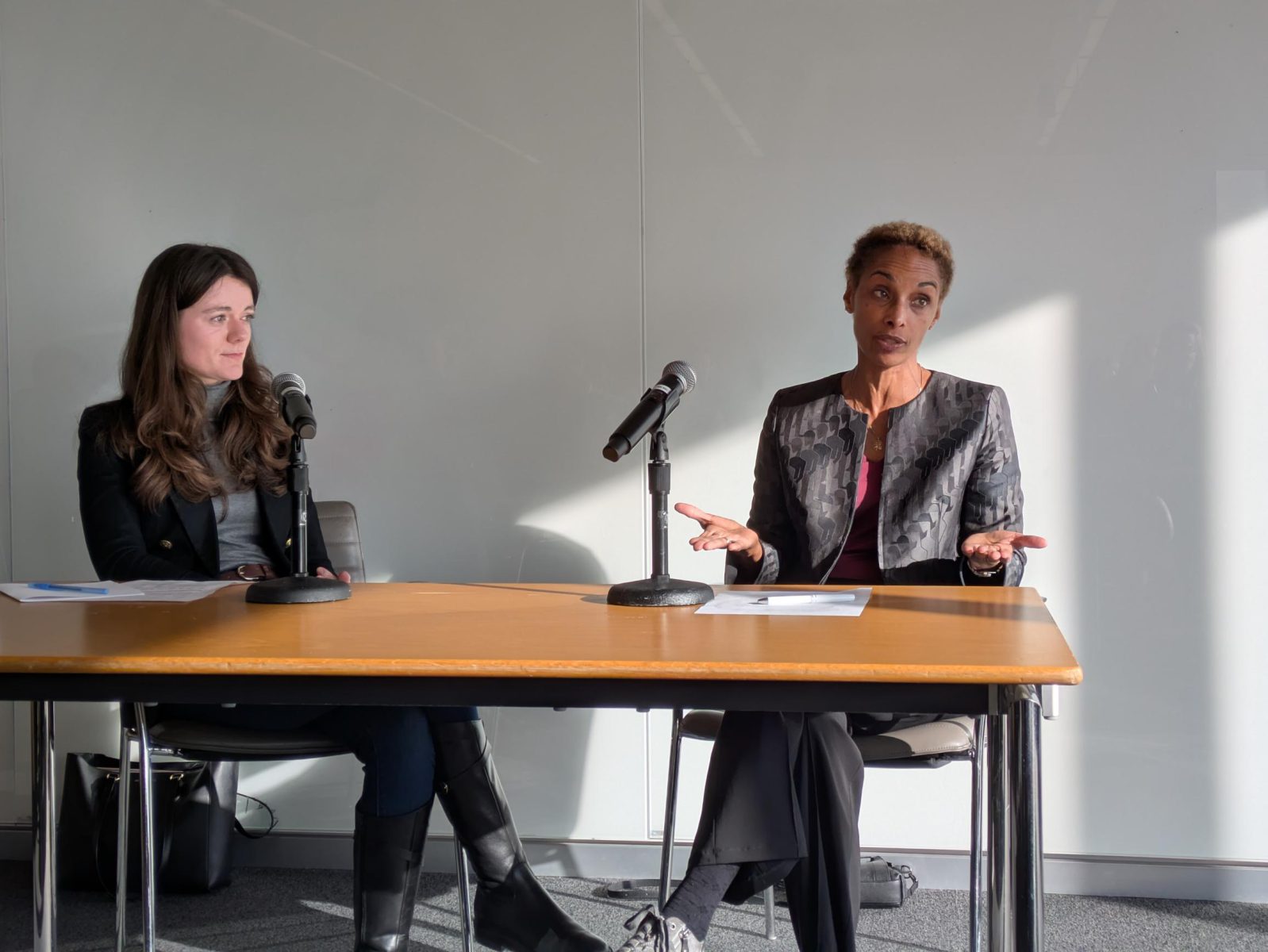
“In my work curating Princeton’s Women in Industry exhibit, I’ve spent a great deal of time with the legacy of Helen Baker—a labor economist who joined Princeton’s Industrial Relations Section in 1930 as its first librarian and research assistant, and who later became the University’s first woman to attain the rank of associate professor,” said Jefferson as she opened the event.
Baker’s work is as integral to the history of women in the workforce as it is to the legacy of the Industrial Relations Section. Her research and findings had a real-world impact on policy and on the opportunities available to women, making marked strides forward.
Asking the Right Questions
Bringing this background into the first segment of the discussion, Jefferson prompted the panel to speak about how research agendas take shape—how economists decide which questions are worth asking—and how experience, history, or exposure to real‑world problems can influence that choice.
With their extensive research and policy experience, Rouse and Carry had much to say on the topic. Through the discussion, a central theme emerged: noticing what’s missing in the research. The two female economists had, time and time again, noticed that women were missing from the research questions being asked, and, therefore, answered. Even decades after Baker’s work moved the needle forward for working women, the work goes on for current and future generations of labor economists.
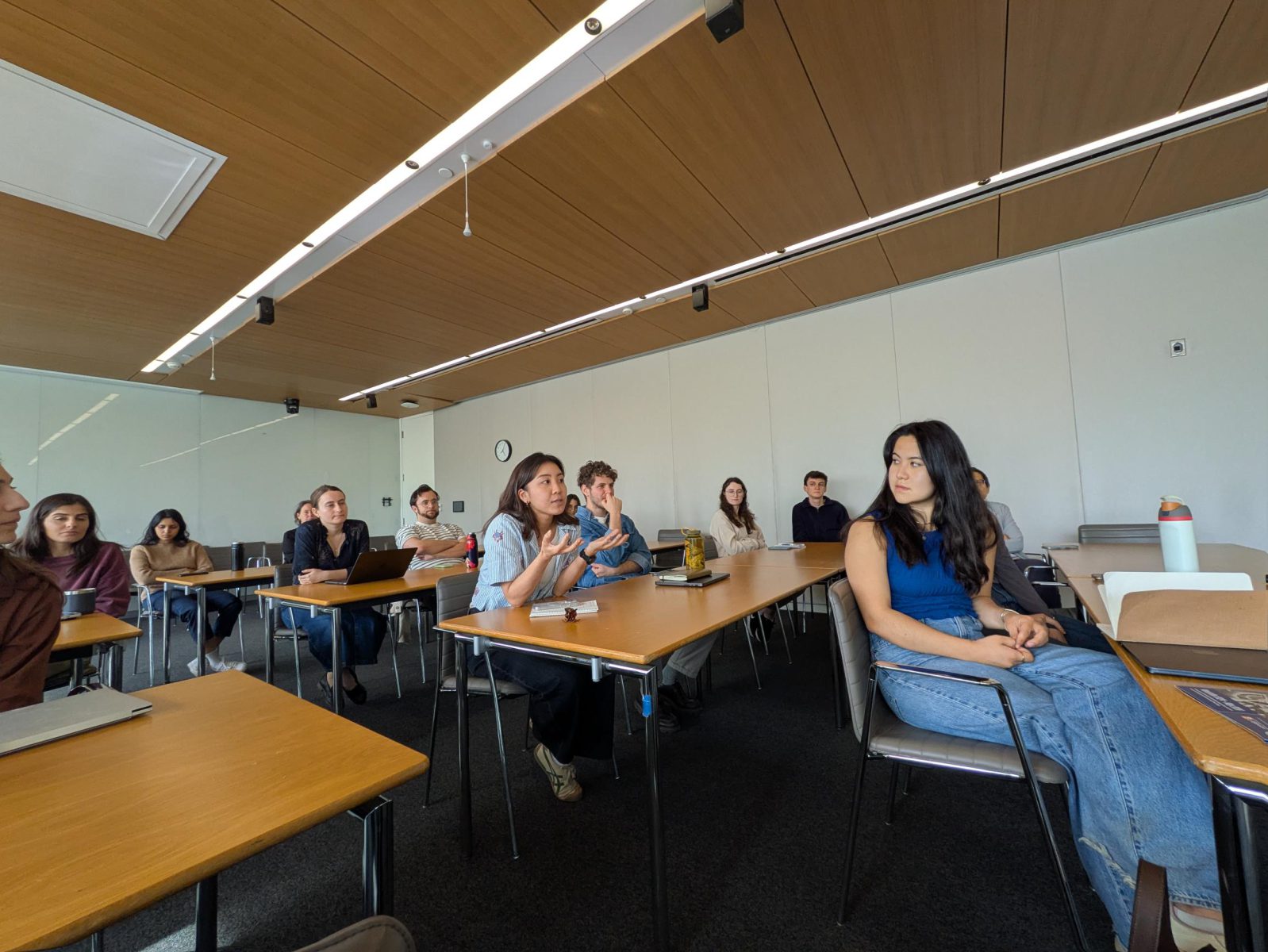
The audience, composed of IRS faculty and graduate students, as well as undergraduate students interested in the topic, participated in the discussion, asking insightful questions of the panel. One of these questions posed, “How do you handle when readers interpret the research and are negative or critical of the conclusions drawn?”
Rouse advised maintaining transparency in one’s research. She pointed to her work with Claudia Goldin as an example. Their landmark 2000 study, Orchestrating Impartiality: The Impact of ‘Blind’ Auditions on Female Musicians, tested sex-biased hiring. Their findings suggested that “the blind audition procedure fostered impartiality in hiring and increased the proportion of women in symphony orchestras.” This directly challenged the worldview of many who believed that women weren’t facing discrimination in the hiring process. Rouse shared that by maintaining transparency, she has been able to meet these challenges openly and stand resolute in her findings.
From Evidence to Policy
“Even strong evidence doesn’t always translate into effective policy. Here, we’ll explore what happens when research findings move—or struggle to move—from analysis into real‑world implementation, and the barriers that can shape whether research is taken up at scale,” said Jefferson, moving the discussion into the next segment.
In 1942, when Baker published Women in War Industries, the United States had entered WWII, and industries across the country were losing employees to the war effort. With Baker’s data in hand, Secretary of Labor Frances Perkins could point to specific issues affecting women and address the labor shortage at the same time.
Rouse and Carry know all too well that the route from evidence to policy is rarely so direct. As Dean of SPIA, Rouse noticed differences between research conducted in academia and that conducted by think tanks, and how that research affected policy, or not. She observed many peers in the Section, including Orley Ashenfelter, traveling back and forth to D.C. to advise on policy matters, putting Princeton’s unofficial motto, “in the nation’s service and in the service of humanity,” into action. Speaking about her transition to working in the White House, Rouse shared that she wanted to cut through barriers and affect policy change more directly.
Relying on her interactions with policymakers, Carry emphasized the role of timing. The moment research delivers important new results with concrete implications may not align with the policy agenda.
Lasting Impact
As the panel event came to a close, Rouse, Carry, and Jefferson spoke about the importance of mentorship, shaping professional paths, and learning to navigate the space between research and impact.
When curating the exhibit and designing the “Right Place, Right Time” event, Jefferson focused on making Helen Baker’s legacy tangible. She hopes that the topic has piqued interest and inspired viewers and attendees, sparking new ideas and encouraging collaboration.
“Library science is a bridge between art and science. Librarians lead people to information and help them make meaning out of it,” Jefferson shared. That is what Helen Baker did as the first Section Librarian, and her impact lives on within the Section and for women in the workforce.
Learn more about the exhibit, Helen Baker, and her research.